

 Could you survive deep in the Alaskan wilderness and make your way out with only the resources from a crashed airplane?
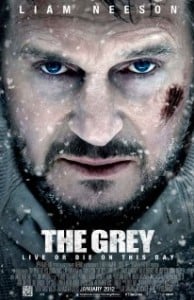
That’s the stark challenge faced by the seven protagonists of the movie The Grey, starring Liam Neeson. An airplane carrying Alaskan oil field workers crashes during a storm, and they must battle harsh winter conditions and a pack of aggressive wolves while attempting to find their way back to civilization. In addition to spectacular cinematography and spellbinding action scenes, the movie demonstrates surprising philosophical depth in delivering its theme: “What does it really mean to fight for one’s life?”
The movie also dramatizes three related principles that are easy to forget during everyday life but that are made vividly clear in the context of the movie:
1) Man’s basic means of survival is his reasoning mind.
The wolves in The Grey survive using their claws, fangs, and instincts in accordance with their basic nature. Humans, however, cannot survive in this fashion. We lack the fur to keep us warm in subzero temperatures, claws and fangs to kill prey (or to protect ourselves against predators), and instincts to dictate our actions. To survive, we must use our minds, rearrange nature, and create the goods we need. Reason is our basic means of doing so.
2) Nature, to be commanded, must be obeyed.
Do you need to start a fire? Then you must identify the nature of the material at hand and proceed accordingly. Do you need to cross a violently rushing river? Then you must devise a method that holds the weight of a full-grown man; you must respect and apply the laws of physics. Wishful thinking, bluster, or drunkenness won’t make reality bend to your desires or make your problems go away. The only way to solve your problems or accomplish your goals is to face reality head-on, heed the facts, and act accordingly.
3) Modern man is extremely dependent on the benefits of technology.
Technology is an incredible enhancement to our lives. I would rather be typing a movie review on my MacBook Air in the comfort of my living room than shivering in a dark cave wondering whether I’ll be eaten by wolves tonight.
But it’s easy to take for granted the benefits of industrial civilization until we are reminded (in fiction or in real life) what life is like without those benefits. In Ayn Rand’s novel Atlas Shrugged, Hank Rearden hosts a fancy party during a storm. During the party, Francisco D’Anconia tells him:
“[Y]ou are able to have summer flowers and half-naked women in your house on a night like this, in demonstration of your victory over that storm. And if it weren’t for you, most of those who are here would be left helpless at the mercy of that wind in the middle of some such plain.”
The Grey reminded me how grateful I am for the many entrepreneurs, engineers, and businessmen who have created our modern industrial civilization. Without them, we wouldn’t enjoy the iPads, cell phones, automobiles, central heating, and electricity we so easily take for granted. Instead, we’d be like the protagonists of The Grey, struggling mightily against raw, untamed nature, hoping to survive another day.
For this reason, although The Grey is not a political movie, it also helped me better appreciate Ari Armstrong’s recent blog post, “Great Producers Deserve Our Gratitude, Not Obama’s Tax Hikes.”
In the hubbub of everyday life, it’s easy to forget some basic truths about man, nature, and the fundamental role of reason in our lives. A gripping tale of novel and dire circumstances, The Grey reminds us of what we must never forget if we want to live.
You might also like