The 1960s and ’70s were replete with glamorous spy shows and movies. Many, from the James Bond movies to Danger Man, focused more on style than substance, offering simple storylines that served primarily as vehicles for an escape into a world of suave spies, international intrigue, and indulgence in all manner of pleasures.
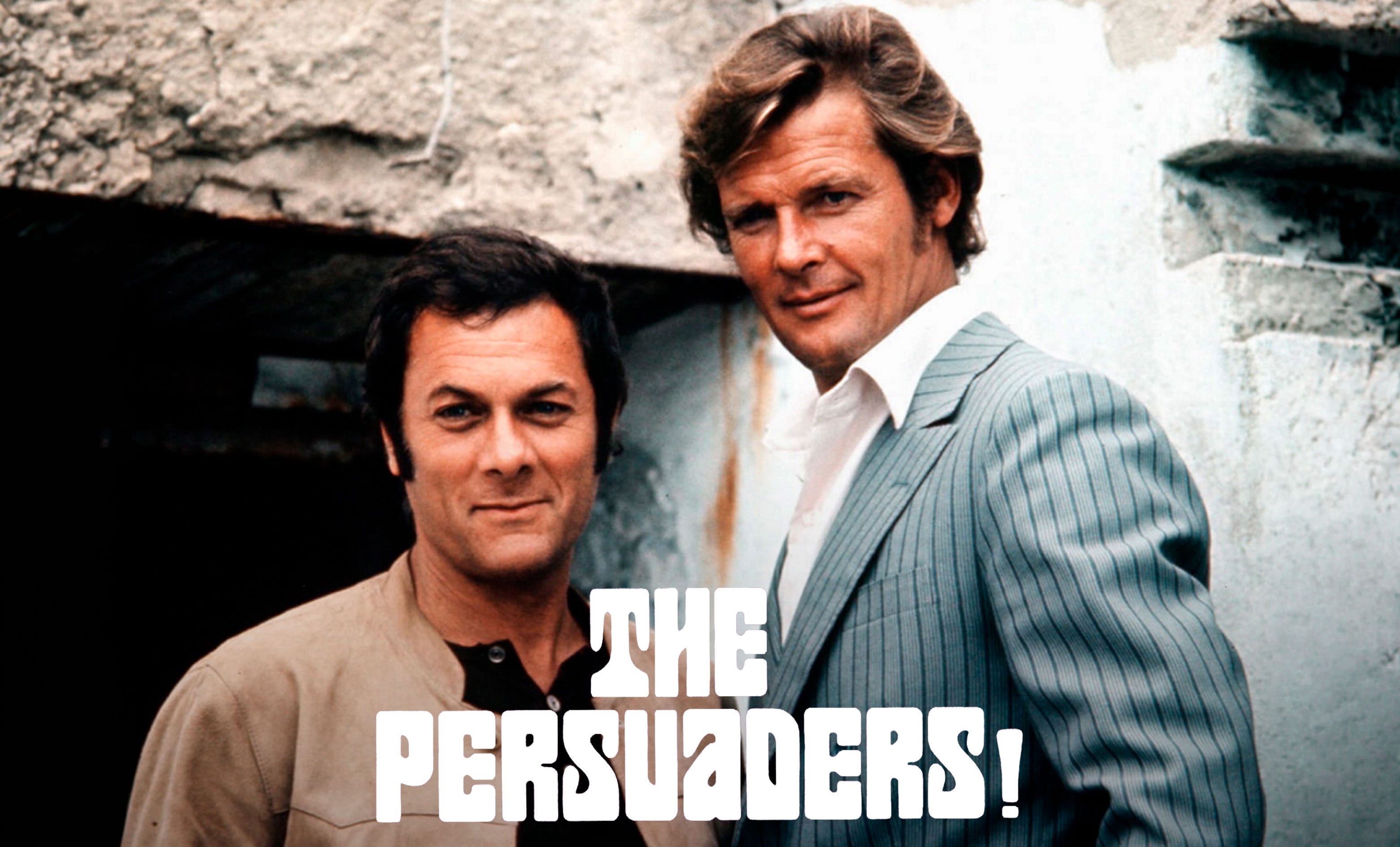
However, a few delivered richer stories interwoven with valuable ideas. A stand-out example of this is The Persuaders! (1971), a short-lived series telling the story of two wealthy hedonists who gradually discover the values of justice, purpose, and friendship.
At the start of the series, American street kid turned successful oil investor Danny Wilde (Tony Curtis) and British aristocrat Brett Sinclair (Roger Moore) are indulging in all the pleasures that the Côte d’Azur has to offer. After a chance meeting at Nice airport, the two clash like children, showing off to win over the same women, racing their sports cars along the Riviera, and even trashing a restaurant in a fistfight over how many olives should go in a drink. They are bailed out of jail by the retired Judge Fulton (Laurence Naismith) on the condition that they use their influence, wits, and resources to help him track down and expose a notorious criminal ringleader he was unable to put away during his legal career. In convincing them that the dangerous mission is preferable to sitting in a French prison, he admonishes the two men about their hedonistic lifestyles, delivering what doubles as a meta-critique of the playboy protagonists popular in spy shows of the time. Referencing Wilde’s past success in building his massive fortune from scratch, he remarks,
You were a nothing who became something. And now, you’re a nothing again. . . You have a remarkable talent. . . But what have you done with it? You just drift around the world, gambling and womanizing. . . Yours is the glib tongue at a hundred mindless parties. . . Two adult men, both with immense potential—and you fight over an olive!
Fulton talks them into using their connections, skills, and reputations to help him catch his target. Over the episodes that follow, Fulton regularly tasks Wilde and Sinclair with new missions as he works to settle his regrets about all the criminals who escaped justice during his time as a judge. As well as appealing to the two men’s egos, Fulton initially must remind them that he has the power to have them put away for their many legal transgressions in the pursuit of pleasure, but over time, they begin to savor their new sense of purpose. Eventually, they even begin some crime-fighting missions of their own, often motivated by the desire to rescue or protect an innocent person victimized by some kind of criminal operation.
Although this pursuit of justice drives the show’s action, the heart of its story lies in the friendship that develops between Wilde and Sinclair. Their relationship evolves from childish competitiveness and bravado into what in modern terms might be called a “bromance.” They continue to chide each other over everything from their backgrounds and dialects to their driving skills and drink choices, but that banter quickly shifts from derogatory to affectionate. Curtis and Moore excel at portraying a loving friendship hidden behind a veneer of masculine antics, making the two’s admiration and care for each other plainly visible even in interactions that otherwise would seem foolish and argumentative. The evolution of their relationship is a pleasure to watch, and it makes it natural and satisfying to see the two risk life and limb for each other when things get serious.
Wilde and Sinclair’s friendship, much like their crime-fighting escapades, fills their lives with purpose once again. This is what makes The Persuaders! such an extraordinary example among spy shows of its era: It’s really a story about discovering what’s important in life. At the same time, it’s a lighthearted adventure that oozes 1970s aesthetics—from cars to clothes and much more—and that revels in the more unrestrained attitudes of that time with its risqué humor, especially around Wilde and Sinclair’s constant attempts to woo the women they meet in the course of their exploits.
Like most classic spy shows, The Persuaders! is a fun opportunity to enjoy action, glamor, and intrigue—but unlike many, it has at its core a valuable message about why the pursuit of a life-serving purpose, not merely of pleasure, gives a man’s life meaning. Its fifty-fifth anniversary is a great time to revisit its short, twenty-four-episode run and enjoy how fun yet thoughtful TV shows once were.


