


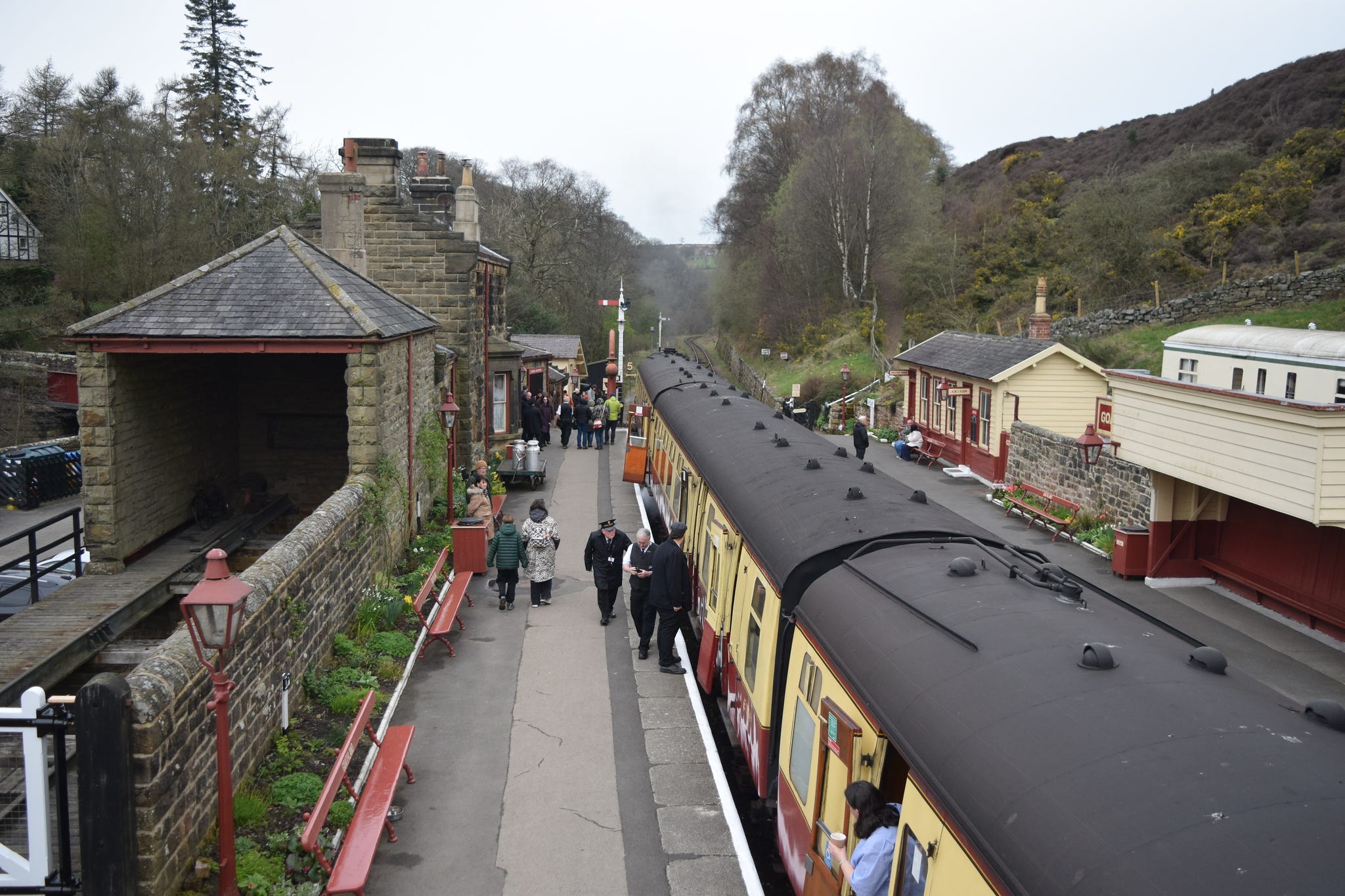
Recently, I walked along the platform at “Hogsmeade station,” the idyllic arrival point for wizarding students riding to school on the Hogwarts Express.
This wasn’t one of the theme park re-creations of Hogsmeade station but the actual station used in the Harry Potter movies. Named Goathland, it’s a stop on the picturesque North Yorkshire Moors Railway with stone buildings and a red steel footbridge that nestle harmoniously among the rolling hills. The only reason it exists today in such well-preserved condition is that it, and hundreds like it, have been painstakingly rebuilt and restored by volunteer railway enthusiasts. These volunteers have turned thousands of miles of abandoned rails across the world into thriving tourist attractions that celebrate industry, technology, and innovation; teach visitors and staff about subjects as diverse as history, economics, and mechanical engineering; and keep alive the sights, sounds, and skills of a bygone age.
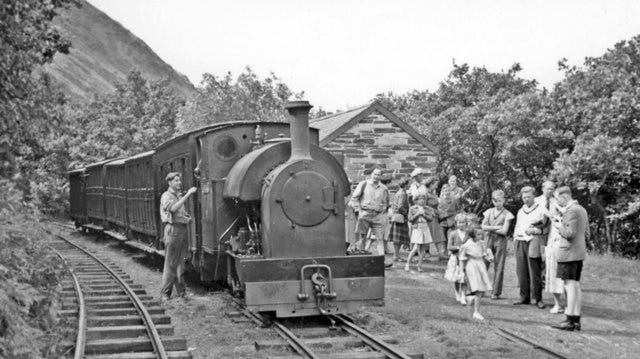
The heritage railway industry began with a few young men who shared a love for a quirky little railway they had discovered while stationed in a remote part of Wales during World War II. The line was called the Talyllyn Railway, and it ran from the edge of the Irish Sea up into the Welsh mountains. Because of the rough terrain, it had “narrow-gauge” track, half the width of the “standard-gauge” tracks common in Britain and much of the world. This lent it a toy-town feel with half-size trains, stations, and equipment. By the time the young men discovered it, the line was owned by Sir Henry Haydn Jones, who had bought it in 1910. Forty years later, the line was limping on, funded out of Sir Jones’s pocket and used only by a handful of village dwellers. By the time he passed away in 1950, the line had deteriorating track, one ailing steam engine, and a couple of rickety coaches.1
By then, most of Britain’s railways had been forcibly nationalized by the government to form British Railways (BR), but the Talyllyn had been omitted deliberately, and nobody was likely to save the struggling operation. Seeing the writing on the wall, these men—author Tom Rolt, radio shop owner Bill Trinder, and historian Jim Russell—formed a committee to acquire the line and run it as a tourist attraction. Rolt, who subsequently wrote a number of books on railways (including a history of the Talyllyn and a biography of engineer Isambard Kingdom Brunel), described the experience of riding the line at this time: “This Talyllyn train made a curious and unrhythmical clattering noise, while it proceeded with a strange undulating swaying motion as though the coaches were a string of towed boats surmounting a succession of small waves.”2
Rolt had a passion for transport and industry, especially in its more curious and esoteric forms, and was active in preserving canals and classic sports cars. He was fascinated to discover a small independent operation that still used 19th-century locomotives and coaches, barely clinging to survival through the efforts of one man and a small band of elderly staff. The state of the line was driven home to him during his first attempt to ride it, when he arrived at the station to find a handwritten sign at the entrance: “NO TRAIN TODAY.” He decided instead to walk the line, observing not only the decaying vintage coaches that seemed to be holding up the shed they were stored in, but also spectacular scenery surrounding the line as it wound, bridged, and tunneled its way along the river up into the mountains.3
Sir Jones’s widow, who had kept the line running through the end of the 1950 operating season, donated it to the band of volunteers in 1951. Rolt recalls, “In 1950, the novel idea of forming a voluntary society to run a public railway was considered crack-brained.”4 But they were determined and began laying new track by hand, servicing the vehicles, and publicizing the line through public meetings and letters to influential people. After a long winter of preparation, they operated their first train in 1951, and the Talyllyn became the world’s first heritage railway.
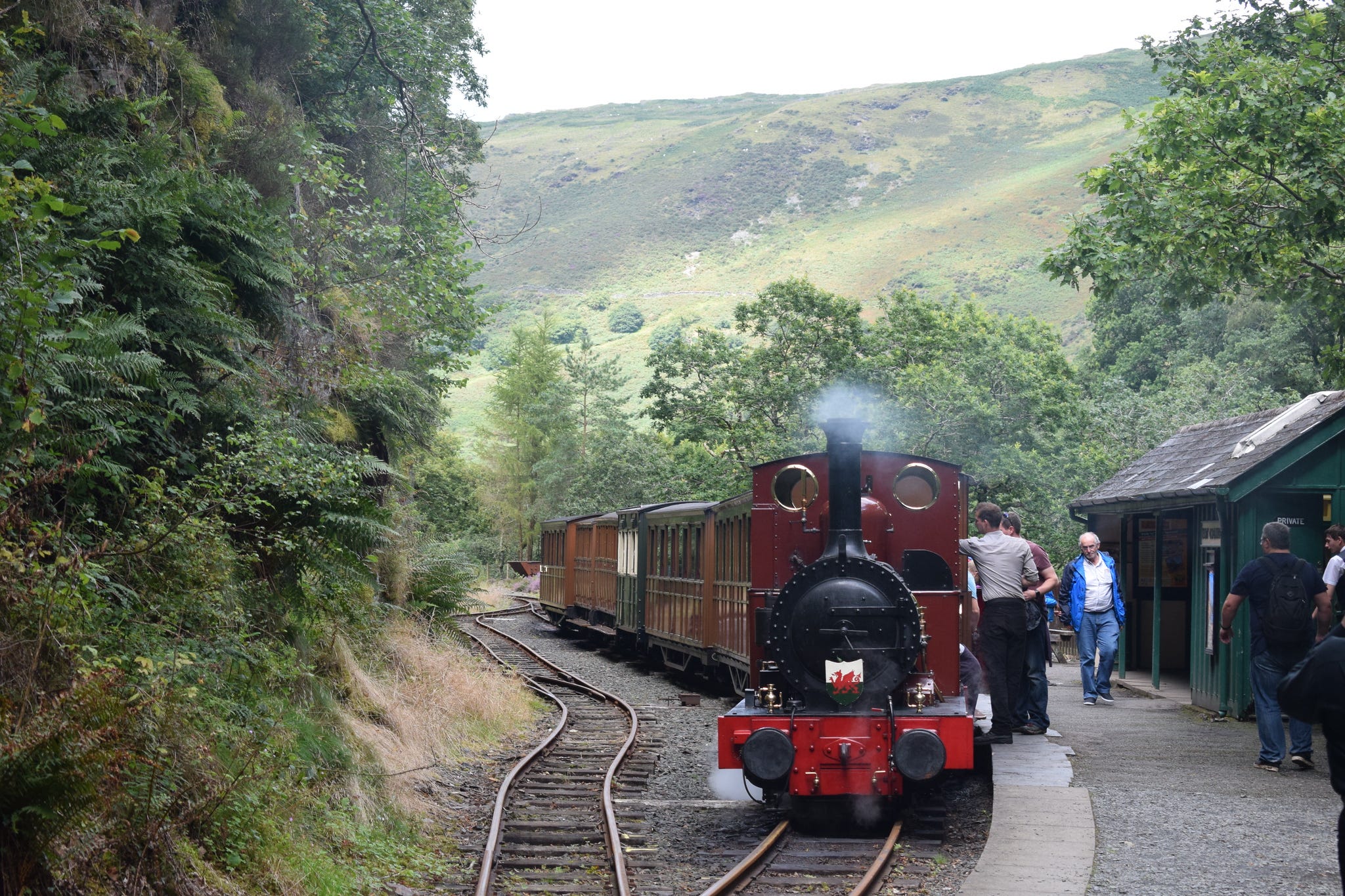
The train promptly derailed on the return journey, and the passengers had to walk back the rest of the way. The early years were beset with similar pitfalls as the volunteers wrestled with worn-out equipment and infrastructure. Once, a locomotive ran out of water part way along the line, and the crew had to run across fields to a nearby farm to replenish it.5 Although these were difficult years, the volunteers enjoyed the challenge and were proud of their work, as Rolt later recounted: “Despite our pride in what has been achieved [since], some of us cannot help feeling a twinge of nostalgic regret as we recall the pioneering days when the train service was maintained by a guess and by God.”6
As the 1950s continued, other narrow-gauge railways were closing due to rising car ownership, and the Talyllyn’s owners negotiated to acquire some of their equipment, including two locomotives. A volunteer constructed another locomotive from scratch. Throughout these turbulent years, the volunteers pressed on, driven by a desire to keep the line they loved operational, restore it to its former glory, and create a working monument to Wales’s distinctive narrow-gauge railways.
Not only did the new equipment relieve their maintenance woes, but it also provided capacity for the line’s growing patronage—it carried 15,000 people in 1951, already far more than it typically had carried before, and that number grew to more than 78,000 by 1965. Despite its growth, the volunteers were keen to preserve its unique character and independent spirit. Rolt saw this, in part, as a way of standing up to the widespread nationalization and standardization of British transport and industry at the time:
False quantitative standards of equality and uniformity imposed in the name of democracy; the false equation of mere size with efficiency which assumes that the larger the organization the better it must be; these things run counter to the grain of human nature and lead to damnation and the dark night of the spirit. Our trains must all be of one colour now (except on the Talyllyn) and are to be hauled by “standard” locomotives of questionable merit. . . . Like the current at the switch or the water from the tap [our trains and our buses] have become “public services” ruled by “them”—unknown officials who might dwell upon a different planet, so top-heavy is the hierarchy of officialdom and so remote from the local communities which it ostensibly exists to serve. It is against this imposed and world-levelling order that the creative individual is bound to fight, not only for standards of truth and of beauty, but for his own survival.7
Rolt and his fellow volunteers were such creative individuals, expressing themselves by preserving and rebuilding a railway that embodied the rustic charm they wanted to continue enjoying in a changing world. Although often strenuous and demanding, their work was satisfying because they loved the railway and found rebuilding it deeply fulfilling. The same motivations have driven untold thousands of volunteers at the Talyllyn and other heritage railways since.
With the railway’s growing profile came more volunteers, including the Reverend Wilbert Awdry, whose experiences working at the Talyllyn inspired him to write his Thomas the Tank Engine books, which sparked a passion for railways (and industry and transportation more generally) in generations of children who followed.8 Awdry later remarked, “I volunteered to help preserve a little railway, and found myself helping to preserve a great deal more—a way of life.”9
Meanwhile, the Talyllyn developed its facilities, creating a museum at the coastal end of the line about the history of narrow-gauge railways and slate mining in Wales. The Talyllyn’s growth, combined with the increasing closure of railways across Britain, inspired enthusiasts up and down the country. Another organization saved the nearby Ffestiniog Railway (another narrow-gauge line) in 1954, and some began to wonder whether the same feat could be achieved with a full-size main-line railway.
That same decade, a legal battle was being fought over the 1955 closure of BR’s East Grinstead to Lewes route, which kept it open until 1958.10 By that time, the movement to save the line—now branded by the press as the Bluebell Railway—had grown substantially. Four students proposed founding a preservation society, and BR station manager Bernard Holden was so interested that he retired from his post and chaired a meeting to form it in 1959.11 Holden loved the romance and awe of steam traction—the sight and sound of these powerful machines that seemed almost alive in their purposeful puffing and chugging—which was fast disappearing by this time. He focused the society on preserving and restoring steam locomotives, giving it the motto “Floreat Vapour” to signify that, unlike the increasingly standardized and nationalized BR, this would be a railway where enthusiasts and the general public could continue to enjoy watching and riding behind a wide diversity of steam locomotives in full working order.12
The group managed to raise enough money to lease a six-mile section and acquire two locomotives and coaches. It began operating in 1960 from Sheffield Park to “Bluebell Halt,” a hastily built wooden platform south of Horsted Keynes.
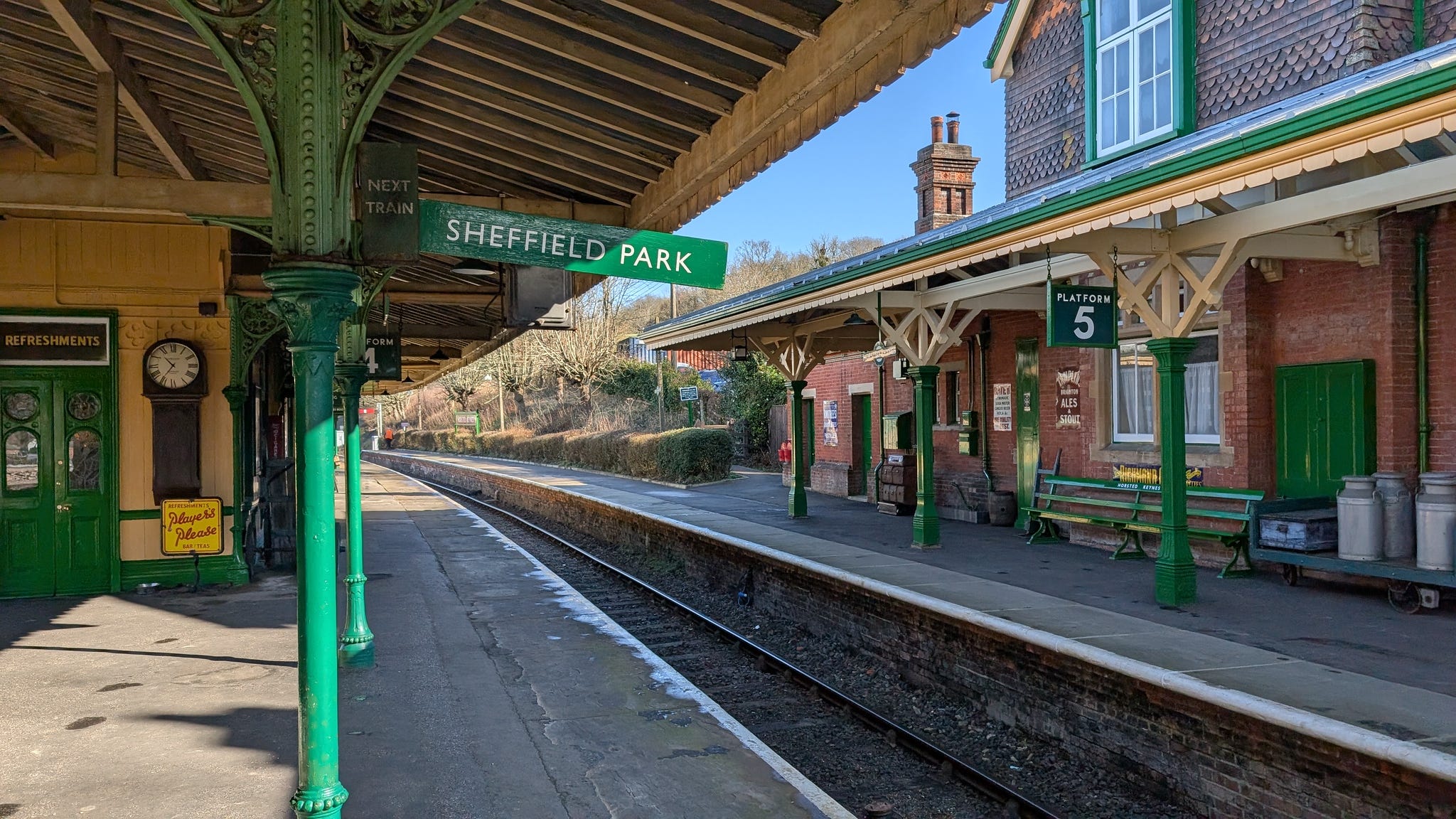
The line drew fifteen thousand passengers in its first year—enough to cover the lease and operating costs.13 Over the following years, the Bluebell Railway grew into one of the region’s leading tourist destinations, attracting two hundred thousand passengers annually by the early 1990s.14 The society extended the line north in the 1980s and again in 2013. This created a long, scenic route connecting the main-line railway from London with the popular country house and landscaped gardens at Sheffield Park. The last extension required removing 3.4 million cubic feet of landfill at a cost of £3.5 million—a testament to how far the railway had come from the early days in the 1960s.15 Holden remained actively involved in the railway’s operations into his nineties and its president until his death in 2014.16
The Bluebell Railway proved that a group of volunteers could operate a full-size railway. Before long, dozens of other preservation societies sprang up across Britain. Today, more than two hundred volunteer-operated heritage railways across the country form an industry that generates more than £600 million ($800 million) per year.17 The volunteers have also preserved and restored beautiful works of architecture and engineering, such as the Severn Valley Railway’s Victoria Bridge and the Llangollen Railway’s idyllic riverside station at Berwyn.
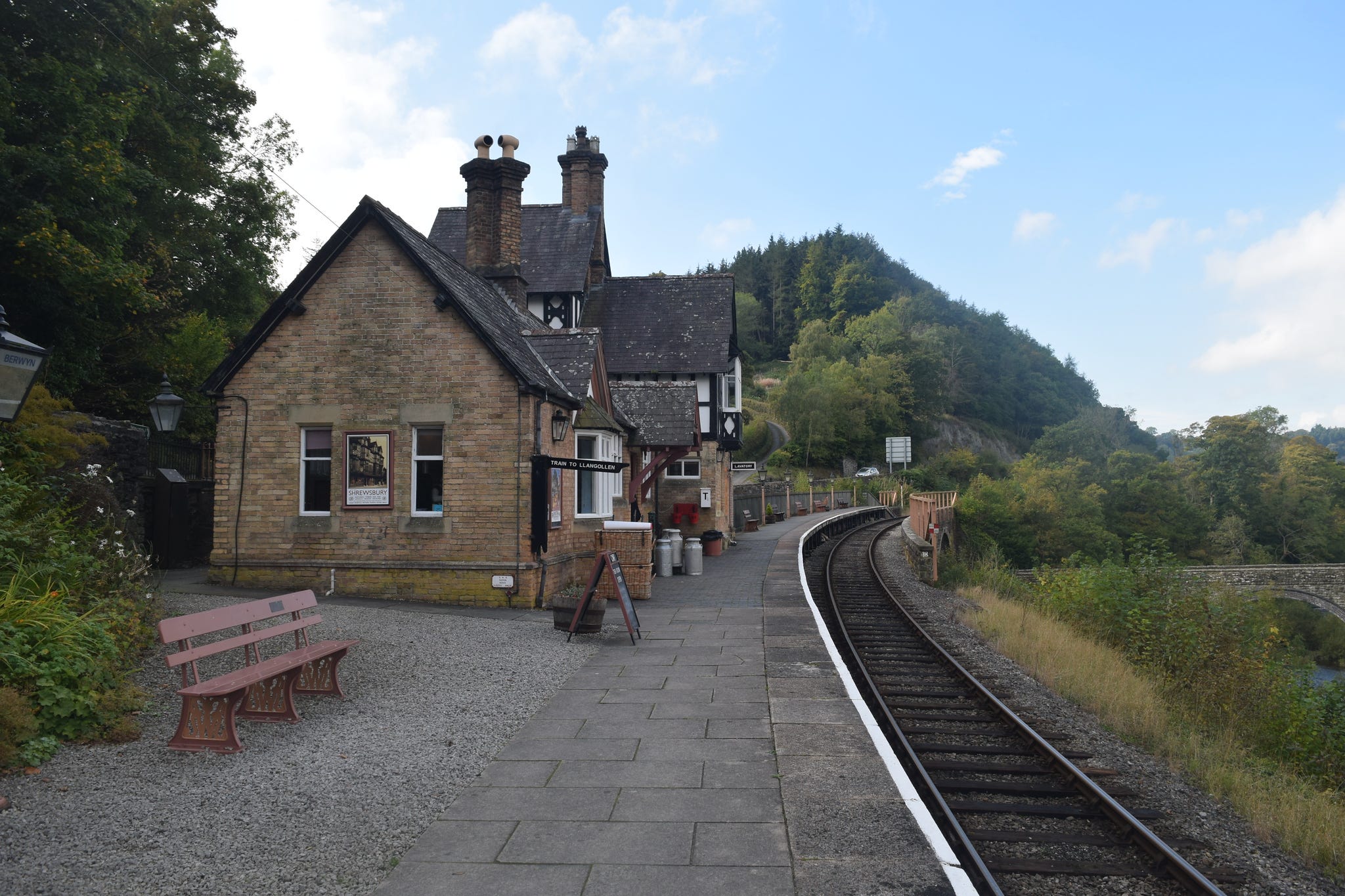
Some heritage railways focus heavily on preserving and operating steam locomotives and telling the story of railway history throughout the steam age, from early pioneers such as George Stephenson and Brunel through the world wars to the decline of the 1950s and 1960s. These railways keep alive the evocative sights, sounds, and smells of steam railways—and the pastoral sense of life they embody—for nostalgic grandparents and excited children alike. Moreover, they teach visitors and volunteers about the broader historical and economic context and about the physical principles of steam traction, many of which are applicable in other fields such as power generation, plumbing, and firefighting. Meanwhile, other railways focus more on diesel traction, teaching the principles of internal combustion engines and the history of rail travel in the 1960s and 1970s. Many also include museums with working demonstrations of signaling, telegraph, and timekeeping systems. Through all these elements, they not only tell new generations about principles of physics, electricity, logistics, and business, but also provide working practical demonstrations of those principles.
Most of these railways carry far more passengers as tourist attractions than they ever did as transport services. Accordingly, many of them have had to compromise the accuracy of their station restorations by building larger buildings and longer platforms. The success of heritage railways in Britain also inspired similar movements around Europe, America, Australia, and across the world.
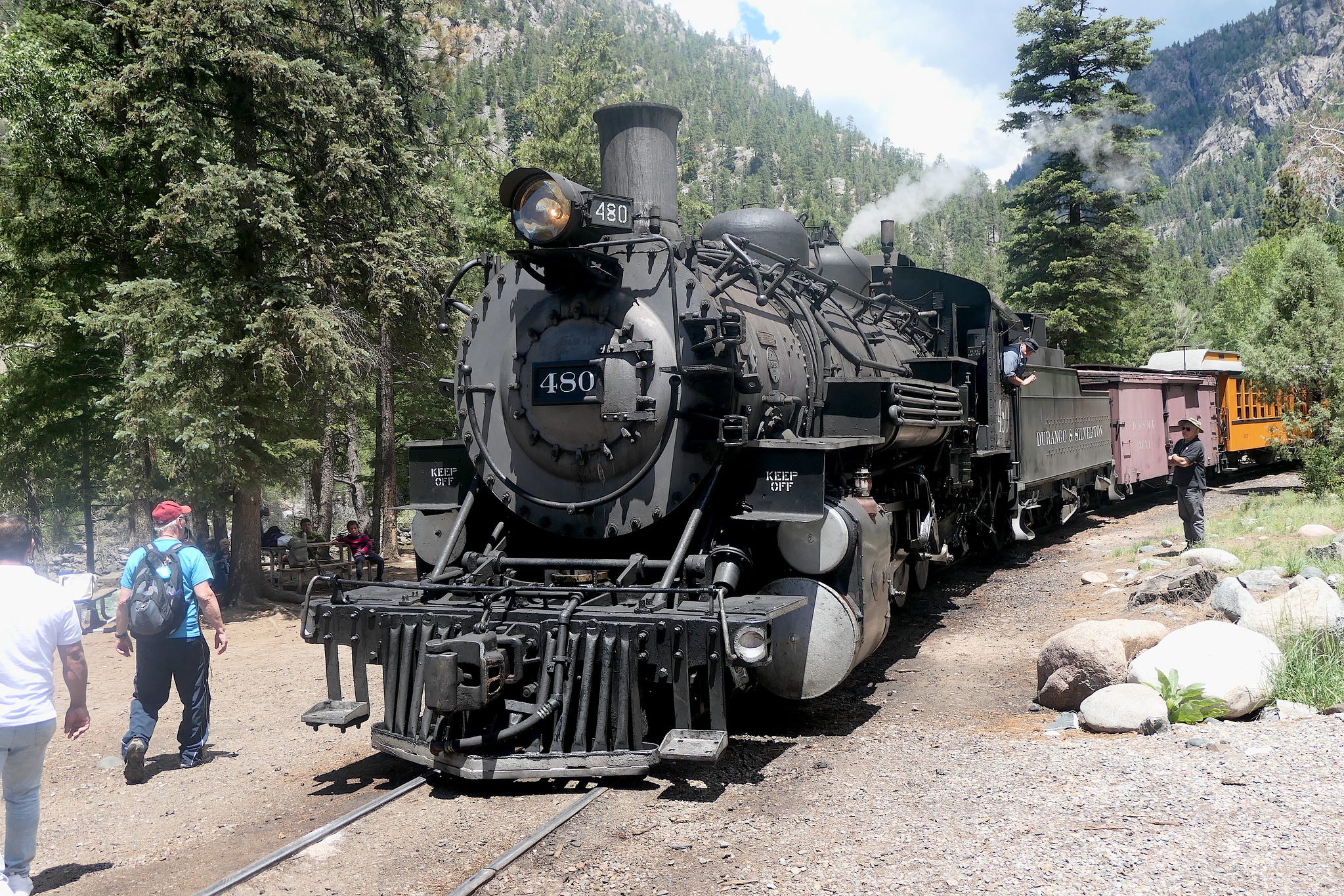
Heritage railways are far more than tourist attractions. They are educational resources, informing new generations about history, economics, business, and more. They teach traditional trades such as metallurgy and woodwork, still much in demand but all too often lost from Western countries due to regulations and inflation.18 They serve as training grounds for railway engineers, emergency responders, and even prisoners in rehabilitation. And they provide beautifully preserved, aesthetically and historically accurate locations for filming movies and TV shows from Harry Potter to James Bond, from Downton Abbey to Doctor Who, from Mission Impossible to The Chronicles of Narnia.19 None of this would exist today if not for the dedication, vision, and audacity of the volunteers who, unprepared to let the lines they loved wither away, decided that they could buy and run their own railways.
This article appears in the Fall 2026 issue of The Objective Standard.
Ian Drummond, “The Railway with a Heart of Gold,” The Railway Magazine, no. 1, 502, May 2026.
L. T. C. Rolt, Landscape with Figures: The Final Part of His Autobiography (Tetbury, UK: Alan Sutton, 1994), 1.
L. T. C. Rolt, Railway Adventure (London: Pan Books, 1961), 28.
Rolt, Railway Adventure, xv.
“Commemorating the Last ‘Haydn Jones Era’ Train,” Talyllyn Railway, https://www.talyllyn.co.uk/news/commemorating-the-last-haydn-jones-era-train, December 14, 2020.
Rolt, Railway Adventure, xv.
Rolt, Railway Adventure, 149.
“Railway Which Inspired Thomas the Tank Engine Marks 75 Years since Becoming World First,” BBC News, May 9, 2026, https://www.bbc.co.uk/news/articles/cz02347714mo.
Talyllyn Railway, Facebook, July 19, 2025, https://www.facebook.com/Talyllyn/posts/pfbid02GFQdK64gdGv7v9SGLUqeXPhmdY88wQdSdHtySS12PZXZFQzK732xzJFqGqDLU8ual.
“The History of the Lewes & East Grinstead Railway,” Bluebell Railway, September 17, 2024, https://www.bluebell-railway.co.uk/bluebell/chist04.html.
“The Bluebell Railway, a Brief History of a Very Famous Steam Railway,” The Post Magazine, June 1, 2023, https://www.thepostmagazine.co.uk/brightonhistory/bluebell-railway-brief-history-very-famous-steam-railway; Derek Hayward, “Bluebell Railway: People,” June 17, 2009, https://www.derekhayward.co.uk/BluebellRailway-1/People/Collection-1.
“UK: Bluebell Railway—The Other B.R. (2 of 2),” Management Today, July 1, 1991.
“Early Days of the Bluebell Railway, Part One,” Bluebell Railway, January 31, 2023, https://www.bluebell-railway.co.uk/bluebell/earlydays1.html.
“UK: Bluebell Railway—The Other BR (2 of 2),” Management Today.
“Dame Vera Launches Railway Appeal,” BBC News, August 7, 2009, http://news.bbc.co.uk/1/hi/england/sussex/8189165.stm.
“Creator of the Bluebell Railway Dies Aged 104,” ITV News, October 4, 2012, https://www.itv.com/news/meridian/update/2012-10-04/creator-of-the-bluebell-railway-dies-aged-104.
“Heritage Rail APPG: Briefing on the Value of Heritage Railways,” The Heritage Alliance, April 26, 2023, https://www.theheritagealliance.org.uk/wp-content/uploads/2023/04/Heritage-Railways-Briefing-April-2023.pdf.
“The China Shock and Its Enduring Effects,” Stanford Center on China’s Economy and Institutions, https://sccei.fsi.stanford.edu/china-briefs/china-shock-and-its-enduring-effects (accessed June 24, 2026).
“The Chronicles of Narnia: The Lion, the Witch and the Wardrobe,” MovieLocations.com, https://movie-locations.com/movies/c/Chronicles-Of-Narnia-Lion-Witch-Wardrobe.php (accessed June 24, 2026); “Downton Abbey Filming,” North Yorkshire Moors Railway, https://www.nymr.co.uk/about/film-and-tv/downton-abbey-filming (accessed June 24, 2026); “Doctor Who in Wales: Barry Island Railway,” BBC, https://www.bbc.co.uk/wales/arts/sites/doctor-who-wales/alllocations/barry-island-railway (accessed June 24, 2026); “Visiting the Real Hogsmeade Station from the Harry Potter Films,” Kelly Prince Writes, April 13, 2025, https://www.kellyprincewrites.com/hogsmeade-station-harry-potter-locations-uk; Tom Cruise Films Mission: Impossible Scenes in Yorkshire, BBC News, April 20, 2021, https://www.bbc.co.uk/news/uk-england-york-north-yorkshire-56816211; “Past Productions Filmed in Peterborough,” Peterborough City Council, January 31, 2025, https://www.peterborough.gov.uk/libraries-leisure-culture-facilities/film-peterborough/past-productions-filmed-in-peterborough.